

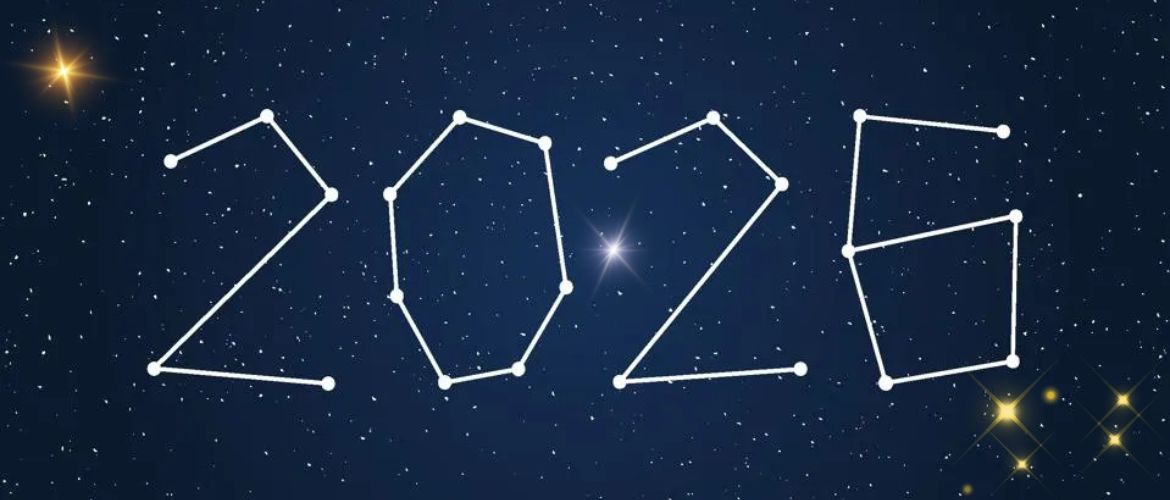
2026 offers many opportunities to observe celestial phenomena. Throughout the year, numerous astronomical events will occur that can be seen with the naked eye or with the help of equipment. At Joy-pup, we have compiled the main cosmic events with exact dates.
Solar and lunar eclipses
In 2026, four eclipses will occur: two solar and two lunar. The most anticipated event will be the total solar eclipse in August, whose path will pass through Europe.
Annular solar eclipse — February 17, 2026
Total lunar eclipse — March 3, 2026
Total solar eclipse — August 12, 2026
Partial lunar eclipse — August 28, 2026
February 28 – grand planetary alignment
In 2026, six planets — Jupiter, Uranus, Saturn, Neptune, Venus, and Mercury — will line up in the sky in the form of an arc. Four of them (Jupiter, Saturn, Venus, and Mercury) will be easily visible to the naked eye, while Uranus and Neptune will require binoculars or a small telescope.
All planets orbit in the same plane of space called the ecliptic, so from Earth it appears that they move across the sky along roughly the same path. When several planets find themselves on one side of the Sun, we see them aligned in a conditional line — this phenomenon is called a planetary parade.
Meteor showers
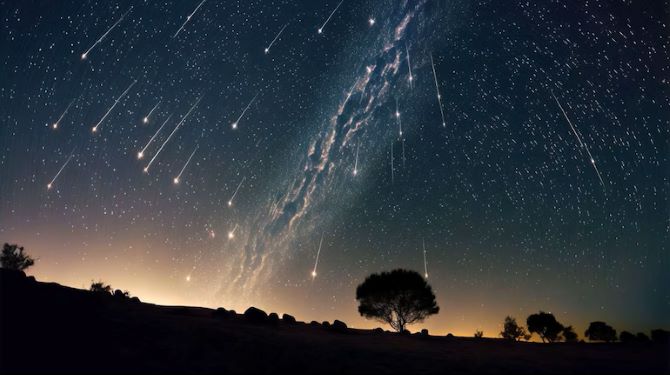
In 2026, all major annual meteor showers are expected (peak visibility depends on moonlight and the observer’s geographical location). Viewing conditions depend on the phase of the Moon (the closer to the New Moon, the better).
- Quadrantids — from January 1 to 12, peak activity January 3–4
- Lyrids — from April 16 to 25, peak activity April 22
- Perseids — from July 17 to August 24, peak activity August 13
- Orionids — from October 2 to November 7, peak activity October 21
- Taurids (Southern and Northern) — from September 7 to December 10, peak activity from November 4 to December 10
- Leonids — from November 6 to 30, peak activity from November 17 to 18
- Geminids — from December 4 to 20, peak activity December 14
Phases of the Moon and Supermoons
A Supermoon is the moment when a Full Moon coincides with the Moon passing through the closest point of its orbit to Earth (perigee). At this time, the Moon visually appears slightly larger and brighter. In 2026, there will be three Supermoons: January 3 (Wolf Moon), November 24, and December 24. On December 24, 2026, one of the brightest Supermoons of the year is expected, the closest Full Moon to Earth since 2019.
Usually, there are 12 Full Moon phases in a year, but in 2026 there will be 13. May will delight observers with two Full Moons — on May 1 and May 31. The second one will be called the “Blue Moon.” Such an event occurs approximately once every 2.5–3 years and is a calendar phenomenon not related to a change in the color of the Moon.
Read also: Mars — the ruling planet of 2026

Only registered users can leave comments