

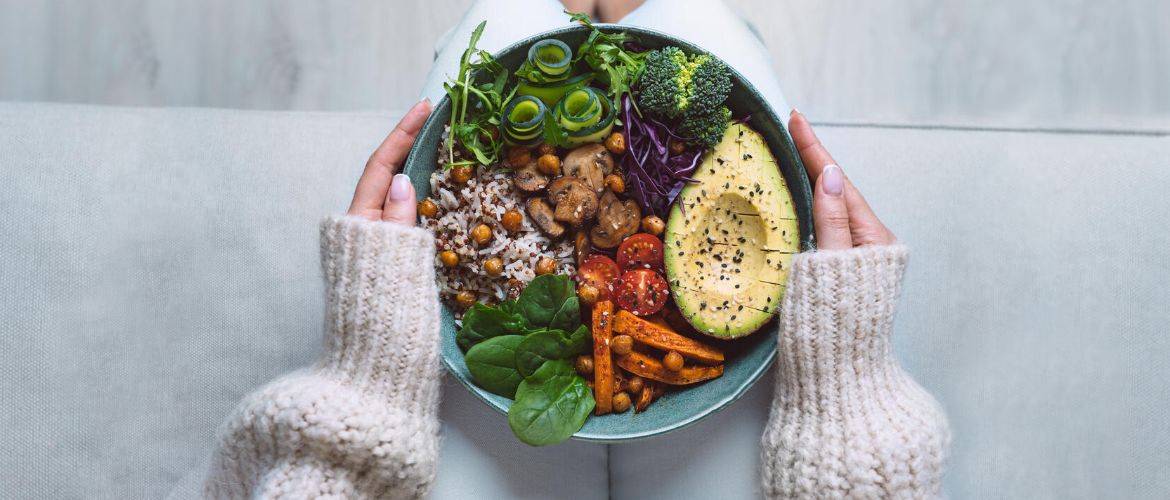

The Harvard Plate is a nutrition system that helps you easily build a healthy diet without complicated calorie counting. It shows which foods and in what proportions should be included in your daily meals to maintain weight, energy, and overall health. Learn on Joy-pup about the benefits of the system, the composition of the plate, and a sample weekly menu.
What is the Harvard Plate
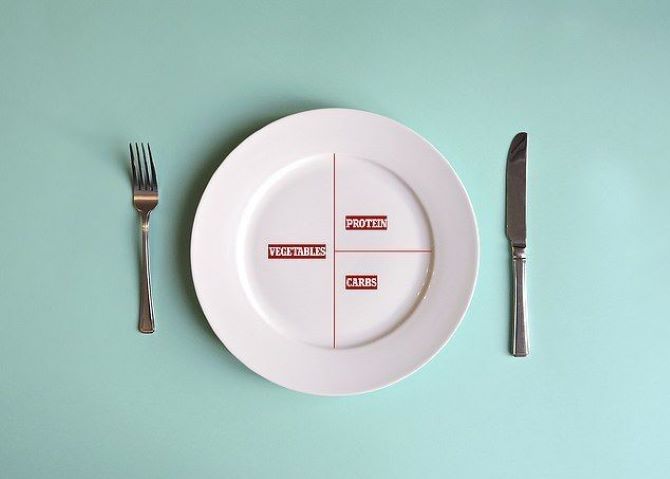
The Harvard Plate model was developed by specialists from the Harvard School of Public Health as a more accurate alternative to the classic food pyramid. Its main advantage is that it focuses not only on the quantity but also on the quality of food. The Harvard Plate is based on decades of independent scientific research in nutrition and preventive medicine. It is an evidence-based nutrition model adapted for everyday life.
The Harvard Plate, also known as the Healthy Eating Plate, is a visual guide to meals in which strict prohibitions are not important, but rather balanced proportions and food quality. Unlike restrictive diets, this method does not require tedious calorie counting or weighing portions. The main goal of the system is to make nutrition balanced, varied, and as beneficial for the body as possible in the long term.
Harvard Plate: advantages
The Harvard Plate nutrition system does not require special knowledge, scales, or calorie-counting apps. Its principles can be applied visually at every meal.
Its benefits:
- Simplicity and clarity. There is no need to weigh food or count calories – just mentally divide your plate into sections.
- Scientific basis. Recommendations are based on up-to-date research and do not promote specific brands or products.
- Disease prevention. It reduces the risk of type 2 diabetes, cardiovascular diseases, and some types of cancer, and helps control weight naturally.
- Long-term effect. It does not cause breakdowns because it does not ban foods but teaches how to choose healthier options.
- Versatility. Suitable for the whole family, for weight loss, weight maintenance, and even muscle gain with proper portion increases.
- Time efficiency. Meals based on the plate principle can be prepared in 15–20 minutes using familiar foods.
- Realism. This is not a diet, but a long-term nutrition system that is realistic to maintain.
What the Harvard Plate includes
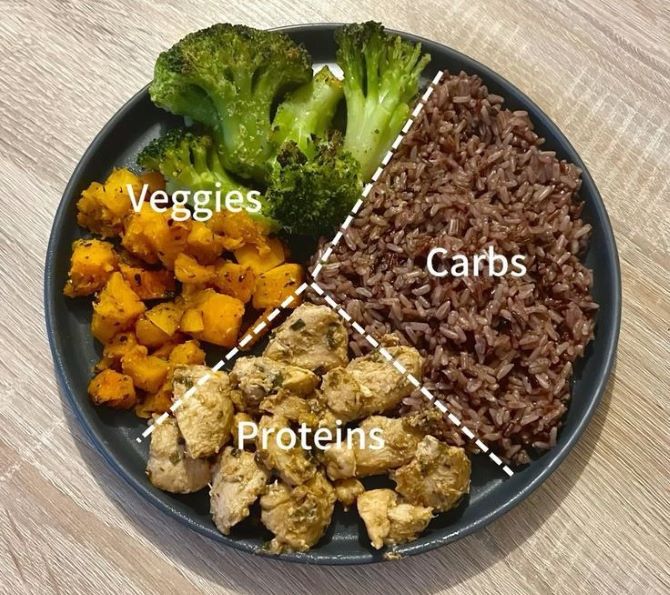
The main secret of the method is the visual division of the plate into segments. This helps ensure all necessary macro- and micronutrients are included in each main meal.
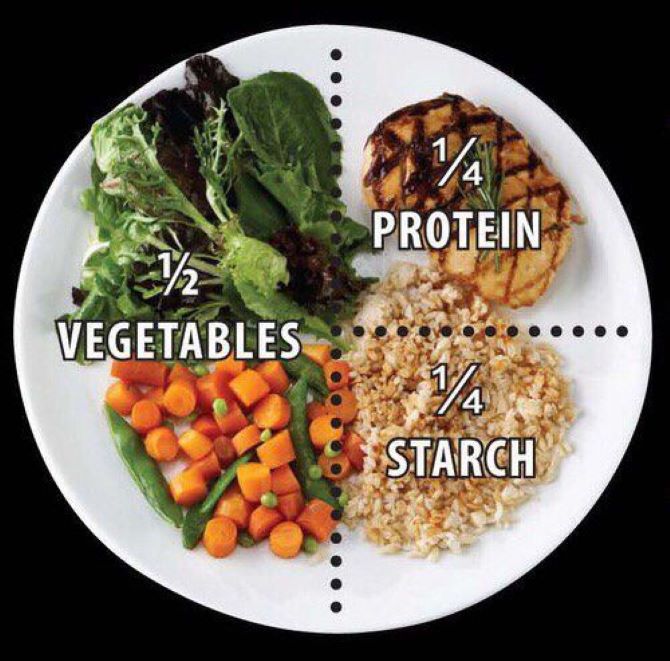
Vegetables and fruits — 1/2 of the plate
The largest portion should consist of vegetables (the more color variety, the better). Important note: potatoes and French fries are not considered vegetables in this system due to their high impact on blood sugar levels. Fruits are also included in this half, but in a slightly smaller amount than vegetables.
Whole grains — 1/4 of the plate
This includes minimally processed grains: brown rice, buckwheat, quinoa, oats, whole-grain pasta, and whole-grain bread. They provide the body with “slow” energy and fiber.
Healthy proteins — 1/4 of the plate
Fish, chicken, turkey, legumes (lentils, chickpeas, beans), and nuts are excellent sources of protein. Harvard scientists recommend limiting red meat consumption and avoiding processed products (sausages, hot dogs, bacon).
Healthy fats and beverages
Outside the plate, but still part of the system, are cold-pressed plant oils (olive, rapeseed, flaxseed, sunflower), nuts, seeds, and small amounts of avocado. The main beverage is water; coffee and tea without sugar are allowed. Dairy products are recommended in limited amounts, and sugary drinks are completely excluded.
The system also emphasizes the importance of daily physical activity and portion control. Even healthy foods in excessive amounts can lead to weight gain.
Harvard Plate: weekly menu
A Harvard Plate menu is built around the principle that every meal includes vegetables, a protein source, whole grains, and healthy fats. Below is a sample weekly menu that can be adapted to your preferences.
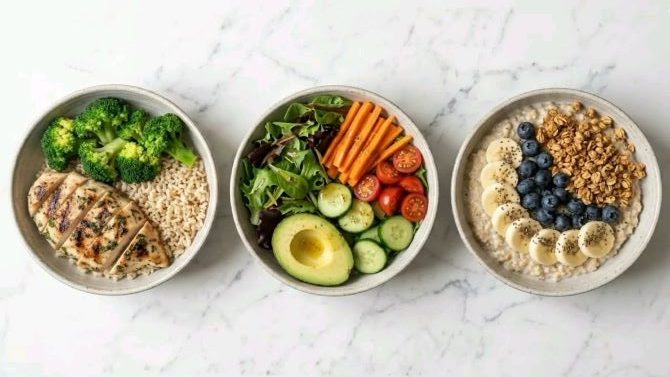
Monday
Breakfast: oatmeal with berries, apple, and a small amount of nuts.
Lunch: buckwheat, chicken fillet, cucumber, tomato, and herb salad with olive oil.
Dinner: baked fish, broccoli, a small portion of brown rice, a slice of whole-grain bread.
Tuesday
Breakfast: whole-grain toast with avocado and a boiled egg, cucumber.
Lunch: lentil soup, fresh vegetable salad, a slice of whole-grain bread.
Dinner: turkey, baked zucchini, and quinoa.
Wednesday
Breakfast: plain yogurt with chia seeds, fruit.
Lunch: barley, baked fish, leafy green salad with vegetables.
Dinner: vegetable stew with lentils, a slice of whole-grain bread.
Thursday
Breakfast: cottage cheese or yogurt with pear and nuts.
Lunch: brown rice, stewed turkey, and a large portion of vegetables.
Dinner: tuna salad with beans, fresh vegetables, olive oil, and a slice of whole-grain bread.
Friday
Breakfast: 5% cottage cheese with fresh berries and a pinch of cinnamon (in moderation).
Lunch: whole-grain spaghetti with vegetables and chicken.
Dinner: seafood (shrimp/squid), vegetable stew, durum wheat pasta.
Saturday
Breakfast: cottage cheese pancakes made with low-fat cottage cheese, rice flour, and berries.
Lunch: brown rice or buckwheat, stewed lean beef, mixed green salad.
Dinner: chicken meatballs, cucumber and radish salad, a small portion of bulgur.
Sunday
Breakfast: vegetable omelet, whole-grain bread, and an orange.
Lunch: borscht or vegetable soup, whole-grain bread, green salad.
Dinner: baked zander, quinoa, mix of greens, cucumber, and avocado.
Read also: how avocado is beneficial for health, weight loss, and beauty



Only registered users can leave comments