

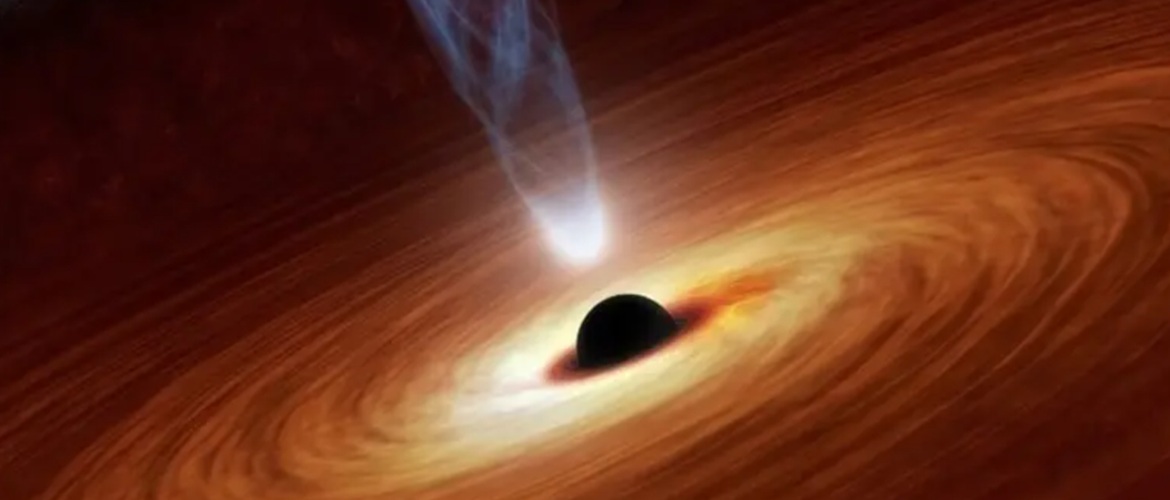

Astronomers have recorded a rare cosmic phenomenon: a supermassive black hole, dormant for about 100 million years, has become active again. The object is located at the core of a huge galaxy distinguished by extremely powerful radio emission.
The galaxy is surrounded by vast, fuzzy plasma clouds—so-called lobes—that indicate that powerful relativistic outbursts were active here approximately 240 million years ago. However, within these ancient structures, scientists have discovered more compact and bright plasma jets, estimated to be approximately 140 million years old.
This pattern indicates that the active galactic nucleus—the region surrounding the supermassive black hole—had entered a dormant phase and then restarted its energetic processes.
According to researcher Kumari, the combination of new jets within old, virtually extinguished lobes is a clear example of the intermittent activity of the galactic nucleus. This confirms that the “engine” at the center of the galaxy can repeatedly turn on and off over vast cosmic timescales.
As a reminder, scientists have discovered a tunnel connecting the Sun with other stars.
To be continued…



Only registered users can leave comments