




Microscopic crystals of corundum, a mineral whose transparent varieties are known as gemstones, have been detected on Mars for the first time. Depending on impurities in their composition, these crystals can take on a blue tint (sapphires) or red (rubies). The discovery was made by the Perseverance rover while exploring Jezero Crater.
While examining three different rock samples, the rover used the SuperCam laser instrument. Using it, scientists induced luminescence—the glow of a substance that occurs after absorbing energy.
A comparison of the resulting glow with laboratory results for ruby revealed a complete match, indicating the presence of corundum in the rocks studied. In the images transmitted by the rover, the crystals themselves are indistinguishable, as they are no larger than 0.2 millimeters.
Experts have not yet been able to determine the exact type of corundum discovered—it could be ruby or sapphire, or less valuable varieties used, for example, in abrasive materials.
On Earth, such minerals typically form in active tectonics zones, but such processes are absent on Mars.
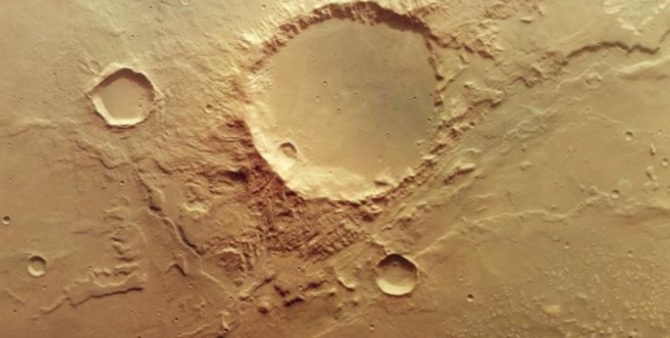
Researchers suggest that the formation of these crystals is related to meteorite impacts: powerful impacts could have created high pressure and temperatures sufficient for corundum formation. Their tiny size also supports this hypothesis.
As a reminder, scientists have discovered a new exoplanet—a red-hot ball of liquid lava.
To be continued…



Only registered users can leave comments