

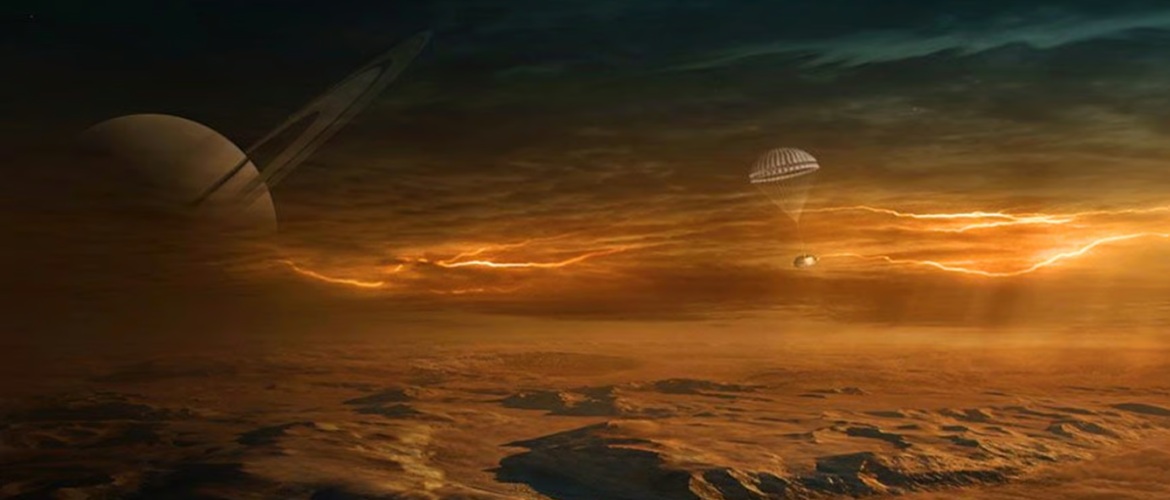


Scientists have reanalyzed data collected by NASA’s Cassini probe and concluded that the interior of Saturn’s largest moon, Titan, may be far more complex than previously thought. The new data cast doubt on the existence of a continuous subsurface ocean and point to the presence of a heterogeneous environment of ice and meltwater. The study was published in the scientific journal Nature.
Back in 2008, Cassini data suggested that a global water ocean lurks beneath Titan’s icy crust. However, a recent analysis of these data paints a different picture. According to scientists, distinctive channels of semi-melted ice and localized accumulations of liquid water may be located beneath the moon’s surface. As one of the study’s authors, Baptiste Journo of the University of Washington, noted, this is not free water like Earth’s oceans, but rather a structure reminiscent of Arctic sea ice or a system of underground aquifers.
A key role in the new discovery was played by an analysis of Titan’s gravitational interaction with Saturn. During its orbit around the giant planet, the satellite experiences strong tidal forces, causing its shape to deform slightly.
The researchers observed that the maximum changes in Titan’s shape occur with a delay of approximately 15 hours after the peak of its gravitational influence. This response indicates significant internal friction and energy loss—a characteristic feature of a viscous, heterogeneous environment, rather than a completely liquid ocean.
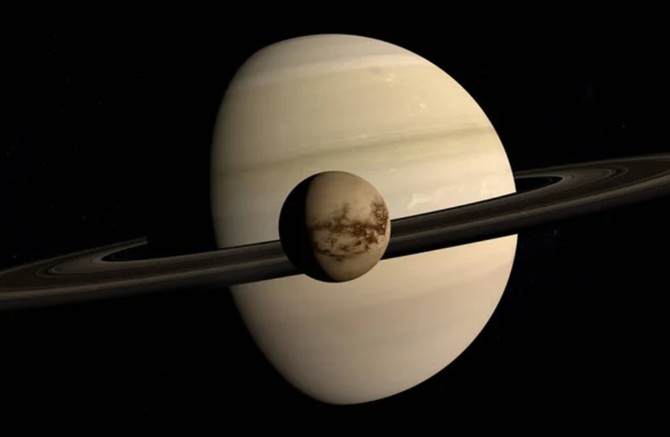
While the absence of a global ocean may seem discouraging for the search for extraterrestrial life, scientists remain optimistic. Isolated reservoirs of fresh water may exist within the “ice slush,” where temperatures can rise to 20°C—a comfortable level for biological processes. Moreover, small, enclosed bodies of water may contain higher concentrations of nutrients than a vast, highly diluted ocean.
NASA’s upcoming Dragonfly mission will help test these hypotheses. The spacecraft is scheduled to launch in 2028 and arrive at Titan in 2034. This drone will be the second vehicle, after Mars’ Ingenuity, capable of navigating the atmosphere of another celestial body and directly exploring its surface and internal processes.
As a reminder, the interstellar comet 3I/ATLAS contains sources of life.
To be continued…

Only registered users can leave comments