


Scientists from the University of Calgary, together with the National Research Council of Canada, have discovered a curious property of living organisms: they emit a barely perceptible light emission that completely disappears after death. Observations conducted on laboratory mice and plants confirmed the existence of a phenomenon known as ultraweak biophotonic glow. The scientific publication Science Alert reported on the study’s results.
Despite the seemingly fantastical idea of a “glow of life,” a team led by physicist Vahid Salari was able to detect individual photons emitted by the cells of living animals and plants. After the death of the organisms, the intensity of this glow decreased sharply, even if the body temperature was maintained at a level characteristic of a living state. The experiments utilized specialized electron-multiplier chambers capable of detecting minimal light signals.
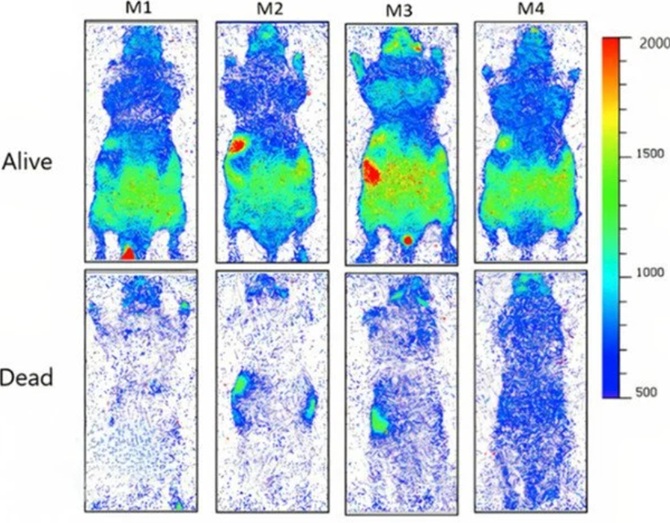
Four mice were placed in a completely darkened space, where their radiation was recorded for an hour. The animals were then euthanized, and observation continued for another hour. The data obtained showed that the level of ultra-weak photon radiation in living mice was significantly higher than after death.
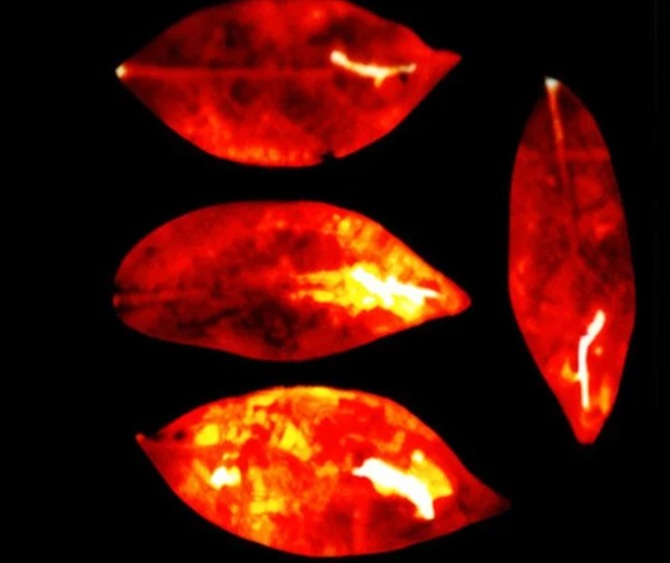
Scientists have also observed similar effects in plants—Arabidopsis thaliana and Heptapleurum arboricola. When leaves were mechanically damaged or exposed to chemicals, light radiation increased precisely in stress zones. This suggests that reactive oxygen species, which arise in cells during damage and oxidative reactions, play a key role in this process.
Researchers attribute the origin of biophotons to biochemical processes within cells. Specifically, the interaction of hydrogen peroxide with lipids and proteins causes changes in the electronic state of molecules, accompanied by the emission of photons. Although this radiation is too weak to be perceived by the human eye, modern instruments can accurately detect it. This method could potentially find practical applications—for example, for non-invasive monitoring of tissue condition and stress levels in living organisms.
As a reminder, scientists have demonstrated the part of the body considered the “seat of the soul.”
To be continued…


Only registered users can leave comments