

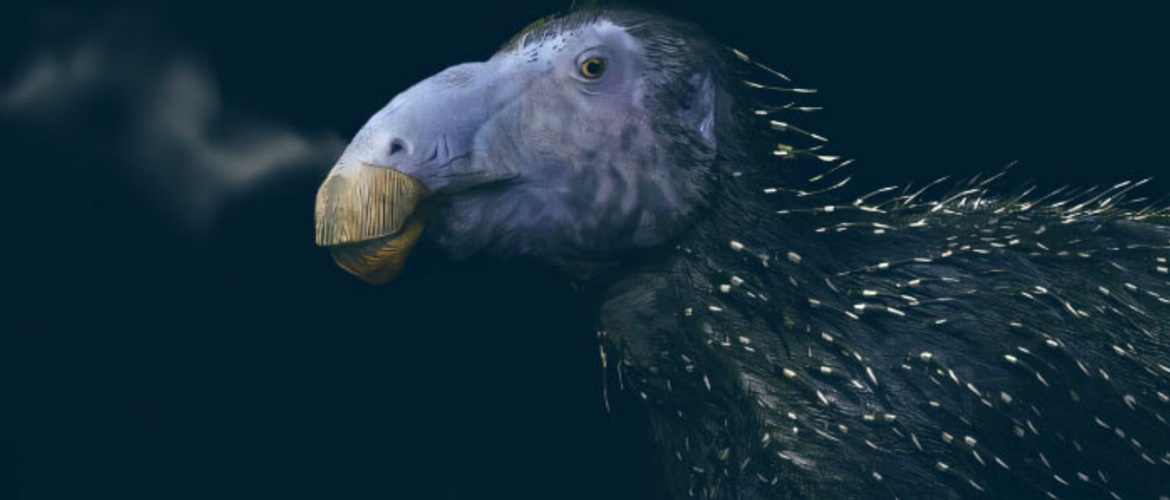


In China, paleontologists have discovered the exceptionally well-preserved remains of a young dinosaur with skin fragments. The discovery revealed that one of the Cretaceous iguanodonts had an unusual integument: its body was covered in dense spines, more reminiscent of hedgehog or porcupine quills than the scales typical of dinosaurs. According to scientists, these structures most likely served a protective function. This was reported by IFLScience.
The fossil was found in the Yixian Formation near Lamagou in Liaoning Province. At first glance, the skeleton was indistinguishable from other iguanodonts – the structure of its bones and teeth was quite typical. However, the unique burial conditions allowed for the preservation of not only hard tissue but also sections of skin, a rarity, especially for the Early Cretaceous.
The new species was named Haolong dongi, which translates as “thorny dragon.” The individual was approximately 2.45 meters long. Unclosed sutures on the vertebrae indicate that the dinosaur was still young. Adults of this species are thought to have grown to 3-5.5 meters.
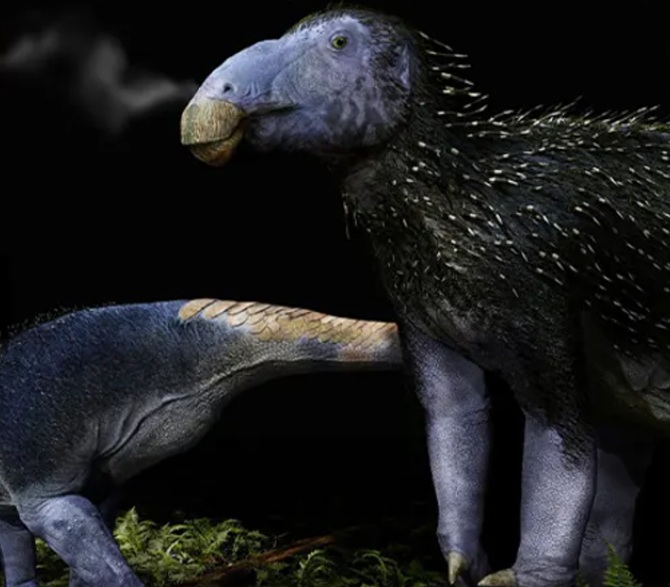
Skin analysis revealed the presence of two types of scales: on the body, they were regular and uninterrupted, while on the tail, they partially overlapped. But the most remarkable feature was the numerous spines. They were hollow and cylindrical in shape and varied significantly in size: most were 2-3 millimeters long, while the largest preserved spine was approximately 44 millimeters. The researchers emphasize that these structures formed independently of the protofeathers or spines of modern reptiles. According to the study’s authors, the primary purpose of this covering was protection from predators. During the Cretaceous, potential enemies of this species were relatively small, and the presence of spines could have hindered attacks, making prey less attractive. However, the scientists also suggest other possible functions for the spines, such as thermoregulation or display behavior to attract mates or ward off rivals.
As a reminder, scientists have proven that chimpanzees can think like humans.
To be continued…



Only registered users can leave comments