

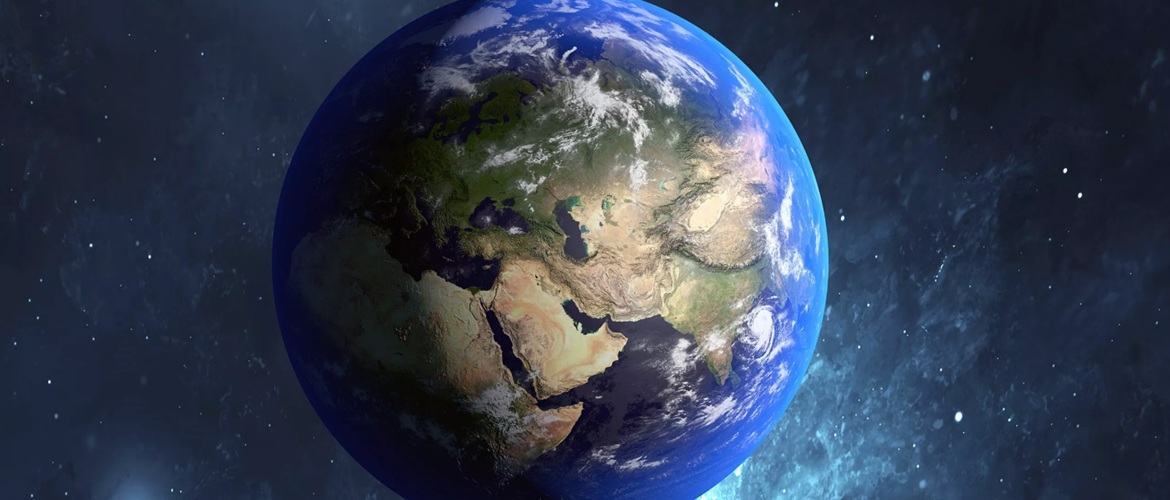


The question of our planet’s true age has long been a source of heated debate among scientists. For decades, researchers have put forward various hypotheses and conducted numerous studies in an attempt to determine the true age of the Earth. Today, thanks to modern scientific methods, experts have come significantly closer to a definitive answer.
A recent scientific paper, published in the Journal of the American Chemical Society (ACS), examines the role of the mineral zircon in geochronology. This scientific discipline determines the age of the Earth and various geological features by analyzing radioactive decay processes. By studying ancient zircon crystals and the changes occurring to the uranium they contain, scientists have obtained important data on the age of our planet. They estimate that the Earth is approximately 4.54 billion years old.
As geologist Rudi Molinek explained, uranium is one of the so-called parent isotopes. Over time, it undergoes radioactive decay and gradually turns into lead. During this process, particles—protons and neutrons—are released from the atomic nucleus. When decay is complete and lead is formed, the atom becomes stable and no longer exhibits radioactive properties.
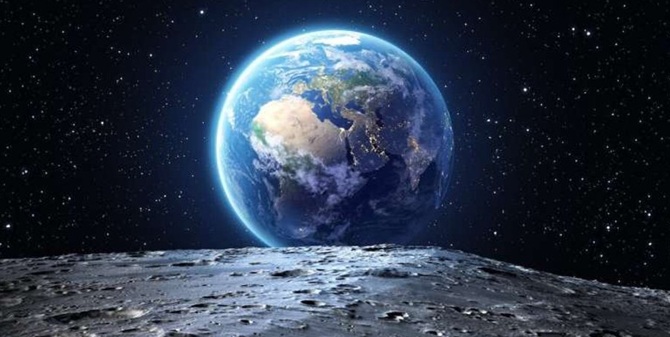
Experts note that the transformation of uranium into lead is very slow—this process can take billions of years. However, the decay rate is well-studied and remains constant, allowing it to be used as a kind of “geological clock.” Using this system, scientists can accurately determine the age of rocks and minerals.
Zircon is particularly valuable for such research. This mineral forms under specific geological conditions: uranium readily incorporates into its structure, but lead is virtually nonexistent. Because of this, the crystals retain the original amount of uranium from their formation. Over time, lead, formed by decay, gradually accumulates within them, allowing scientists to determine the age of the mineral.
Furthermore, zircon helps researchers better understand the early history of our planet. Some of the oldest known crystals were discovered in the Acasta gneiss in Canada. Scientists estimate their age at approximately 4.02 billion years. These minerals contain unique information about the conditions that existed on Earth during the earliest stages of its formation.
As a reminder, a comet capable of traveling backward in time has been discovered.
To be continued…


Only registered users can leave comments