

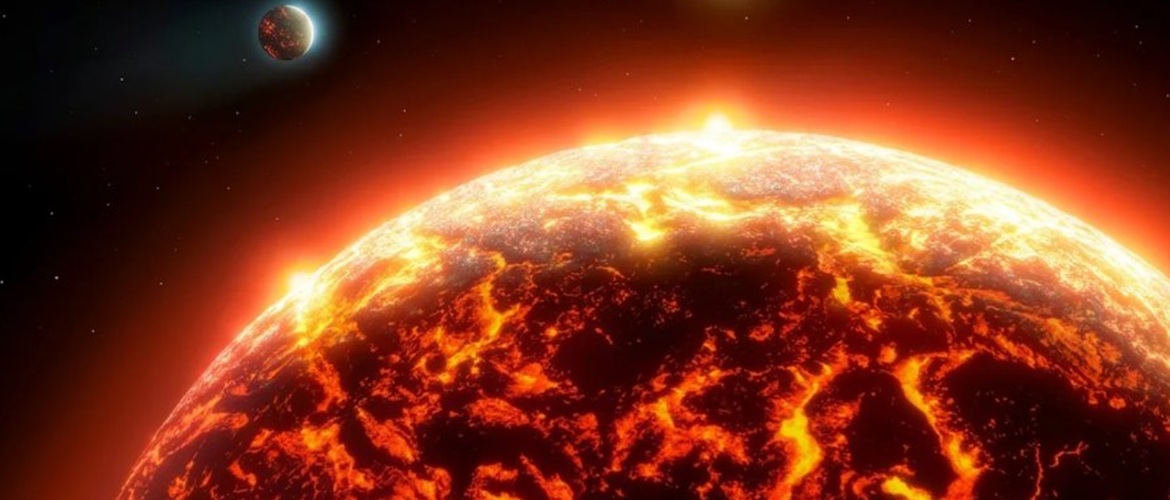


Beyond our solar system, scientists have discovered a truly unusual world that has forced us to rethink our conventional ideas about planets. The newly discovered exoplanet looks like a true cosmic hell: its surface is covered in a vast ocean of molten magma, temperatures reach approximately 1,500 degrees Celsius, and its atmosphere is filled with a suffocating odor reminiscent of hydrogen sulfide – the aforementioned “aroma” of rotten eggs.
This simultaneously frightening and fascinating exoplanet has been designated L 98-59 d. Its study has revealed that the diversity of planets in our galaxy is far broader and more unusual than previously thought. The discovery was made possible by scientists from the University of Oxford, who used data from the James Webb Space Telescope (JWST) and supplemented them with observations from ground-based observatories. Analysis revealed that the planet has an extremely low density and is approximately 1.6 times larger than Earth.
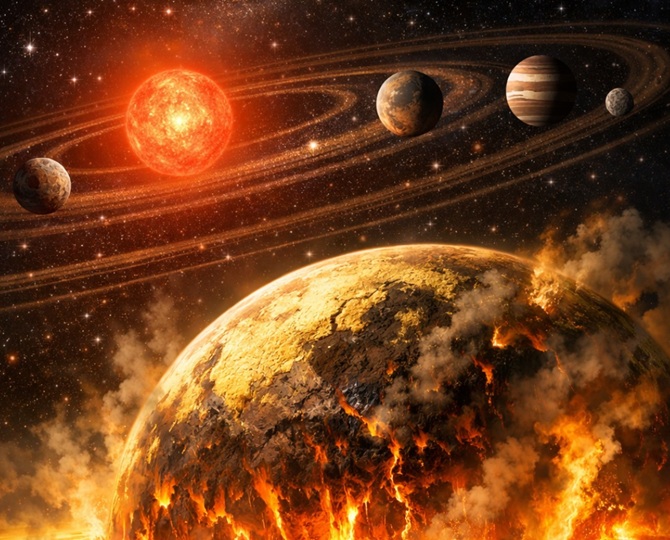
Previously, astronomers would have classified such an object into one of two categories: either a rocky planet with a dense hydrogen atmosphere, or a so-called water world with deep oceans and an icy shell. However, the new data completely shattered these assumptions.
It turned out that L 98-59 d represents a fundamentally new type of planet. Its key feature is a gigantic ocean of molten magma extending thousands of kilometers deep. This allows enormous deposits of sulfur to accumulate within the planet, which then escape into the atmosphere. It is the high concentration of hydrogen sulfide that creates the characteristic pungent odor associated with rotten eggs.
As a reminder, a new exoplanet several times larger than Earth has been discovered.
To be continued…

Only registered users can leave comments