

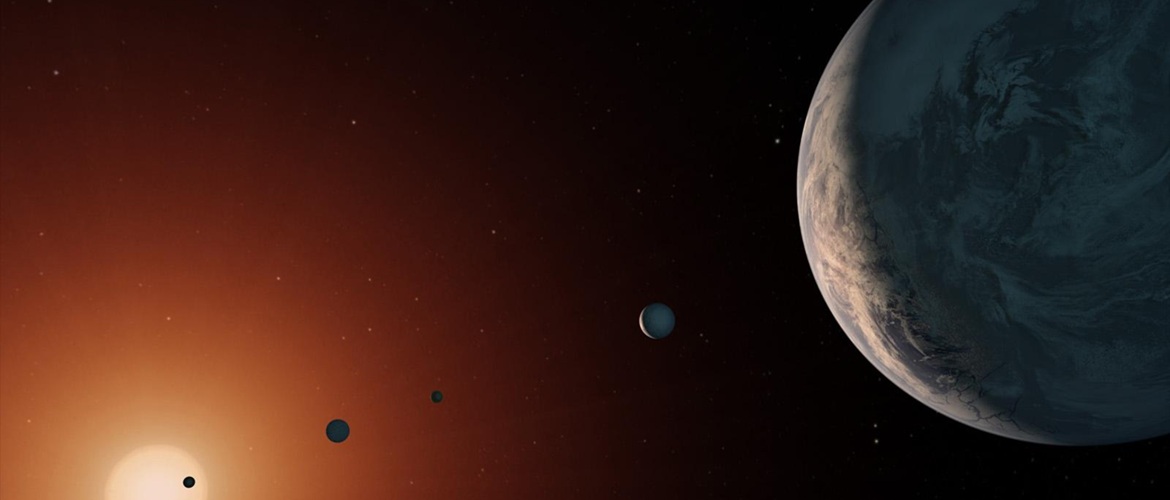

Scientists have identified dozens of exoplanets that could theoretically harbor conditions suitable for life. According to them, among the discovered objects there are about 45 worlds resembling Earth, and some of them are relatively close by cosmic standards.
The work was carried out by specialists from the Carl Sagan Institute at Cornell University. They studied more than six thousand exoplanets known to date and identified those that are located in the so-called habitable zone – an area around a star where the temperature can allow the existence of liquid water.
The presence of water is considered one of the main factors necessary for the emergence of life. That is why such planets are of particular interest to astronomers seeking to understand how widespread life may be in the Universe.
During the study, scientists named 45 planets that could potentially be suitable for life. In addition, another 24 objects fell into a narrower three-dimensional habitable region. Among them there are both already known celestial bodies, for example, Proxima Centauri b, TRAPPIST-1f and Kepler-186f, and less studied ones, including TOI-715 b.
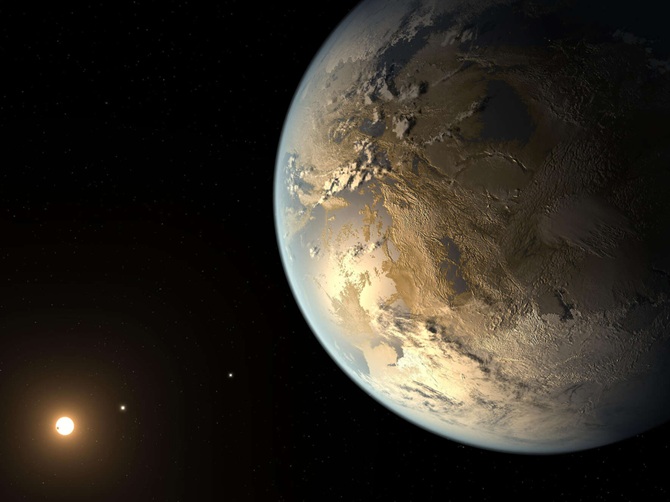
Experts pay special attention to the TRAPPIST-1 system. Its four planets – d, e, f and g – are located about 40 light years from our planet, making them some of the closest and most promising targets for future exploration.
However, even with such a relatively short distance by cosmic standards, getting there with modern technology would be extremely difficult: the journey would take hundreds of thousands of years. Scientists suggest that in the future this period may be significantly reduced – to several centuries – thanks to the emergence of new types of engines, such as nuclear pulse engines.
The researchers also identified a number of planets that receive from their stars approximately the same amount of energy as the Earth receives from the Sun. Such objects include TRAPPIST-1e, Kepler-442 b, Proxima Centauri b, GJ 1002 b and some others.
To study these worlds in more detail, scientists plan to use current and future astronomical instruments. In particular, we are talking about the James Webb Space Telescope, the future Nancy Grace Roman Telescope and the Extremely Large Telescope.
At the same time, the search for possible extraterrestrial life is carried out not only on distant exoplanets, but also closer to Earth. The satellites of Saturn and Jupiter are considered promising objects. For example, Enceladus, with its subsurface ocean and water emissions, as well as Titan, with its complex atmosphere, are considered by scientists as possible places where life could theoretically exist.
Recall that scientists have found crystals of the mineral corundum on Mars.
To be continued…



Only registered users can leave comments