

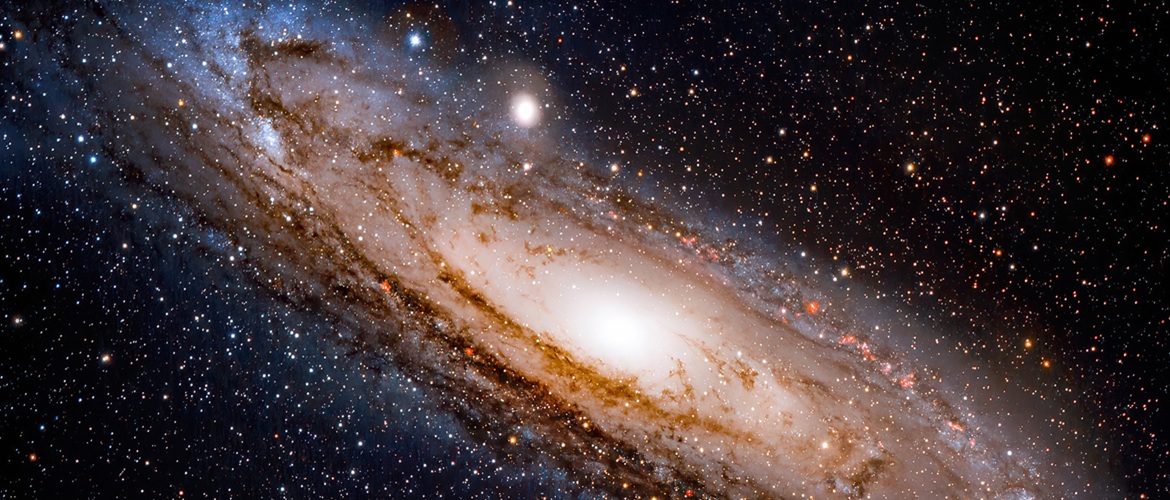

Using the James Webb Space Telescope, astronomers have made a truly unique discovery: they have found complex organic molecules beyond our Milky Way, which are believed to be the basis for the origin of life. These compounds were discovered around a forming star in a neighboring galaxy. The results of the study were published in the journal Astrophysical Journal Letters.
A team of scientists led by Marta Sevilo of the University of Maryland used the Webb Space Telescope’s mid-infrared instrument to study the star-forming region N158, located near the Tarantula Nebula in the Large Magellanic Cloud, a small galaxy near our own.
The distance to this object is approximately 163,000 light-years.
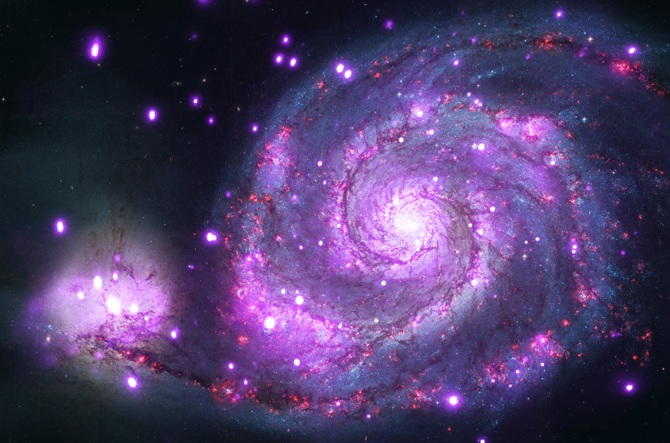
Observations revealed complex organic compounds frozen within dust grains surrounding the massive protostar ST6. These molecules, containing carbon chains of six or more atoms, are thought to be precursors of amino acids and sugars—substances essential for life as we know it.
The key feature of this discovery lies not only in the extragalactic origin of the molecules but also in their state: they were found in their icy phase, before the star’s heating converts them into gases and triggers chemical reactions leading to the formation of more complex organic structures.
In addition, the specialists found traces of glycolaldehyde, a substance thought to be a precursor to ribose, a key component of RNA.
However, as Marta Sevilo emphasized, further laboratory spectral studies are needed to definitively confirm these data:
“Our findings are still preliminary, and to confirm the accuracy of our interpretation, we need new spectra from laboratories,” the researcher noted.
This discovery marks a major step forward in our understanding of how life may have originated in the Universe, and proves that the basic building blocks of biology can form far beyond our Galaxy.
As a reminder, scientists have released an image of the Sun smiling.
To be continued…


Only registered users can leave comments