

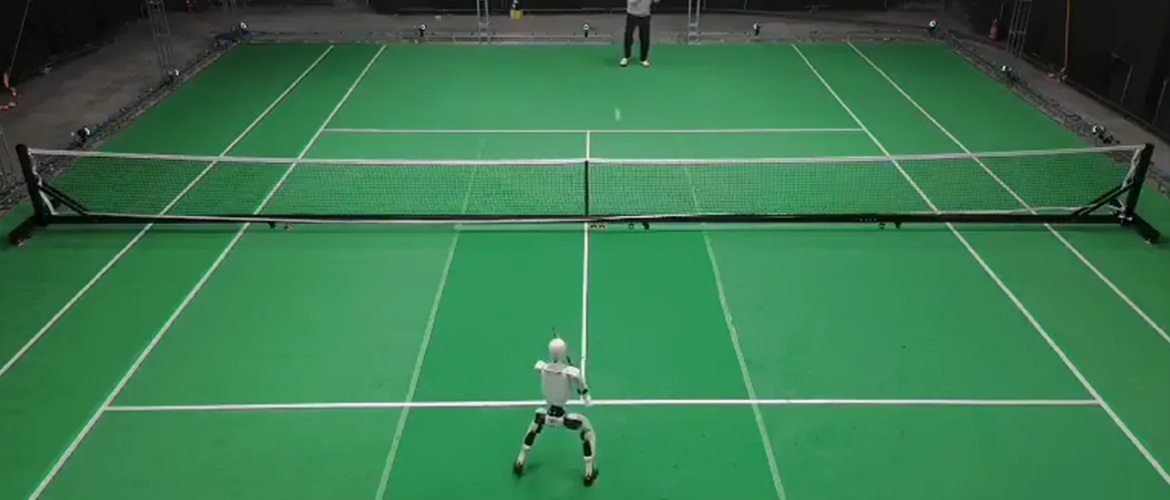
Chinese researchers have presented an innovative system that significantly improves the efficiency of teaching humanoid robots to play tennis. According to the developers, the proposed method has demonstrated impressive results in real-world conditions: robots are capable of confidently playing long rallies alongside humans.
In January 2026, the Walker S2 robot from UBTech Robotics demonstrated practical tennis skills. It successfully combined visual perception, balance, and precision, delivering powerful and accurate shots during demonstration matches with humans.
Researchers from China have proposed a new learning approach that allows robots to master complex tennis moves even with incomplete or imprecise data on human movements. In collaboration with Galbot, the LATENT system was developed, which breaks down the game into individual basic actions—such as the forehand, backhand, court movements, and diagonal shots.
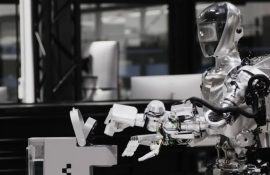
The trained model was successfully integrated into the Unitree G1 humanoid robot, which demonstrated consistent play, confidently returning balls and directing them to target areas. This approach helps solve one of the key challenges in robot training: replicating complex, fast, and precise human motor skills with a limited amount of data.
Furthermore, the LATENT system was tested in real-world matches, where humanoid robots played against humans both at the net and at the baseline.
Although the robot’s performance is still below that of professional tennis players, it is already capable of maintaining long rallies and adapting to various game situations.
As a reminder, Xiaomi robots assembled a car on an assembly line without human intervention.
To be continued…
Only registered users can leave comments