

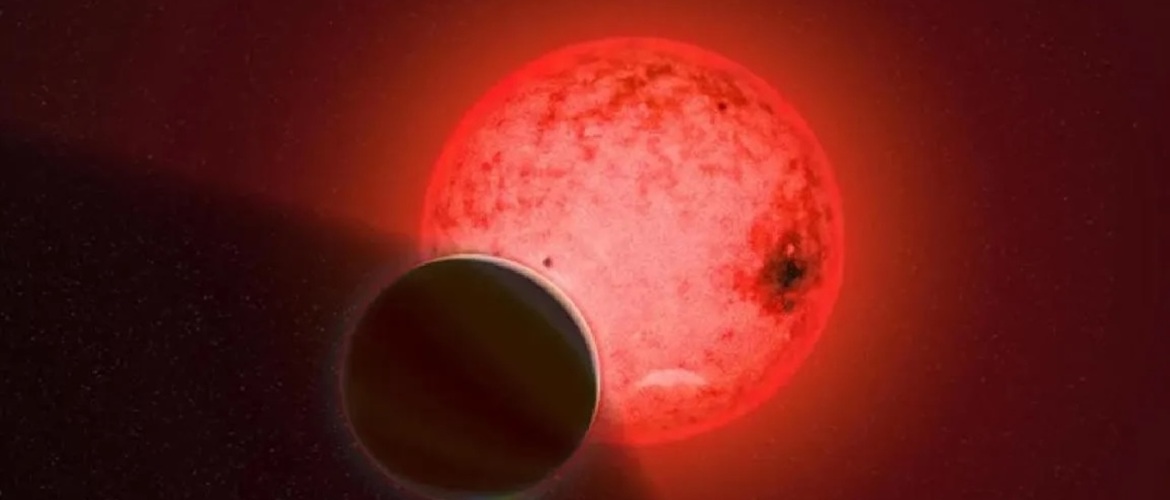

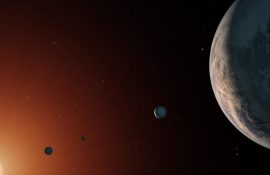
Astronomers have discovered an exoplanet with extremely unusual characteristics: its dimensions do not correspond to standard models of formation, and its atmosphere looks almost “impossible” from the point of view of the usual planetary theory.
The study is based on spectral analysis data obtained by the James Webb Telescope. The results showed that the atmosphere of the planet TOI-5205 b was unexpectedly “clean” – it contained significantly fewer heavy chemical elements than expected.
At the same time, scientists were able to detect traces of methane and hydrogen sulfide. The overall chemical picture suggests an atmosphere dominated by carbon while oxygen content is extremely low, making it atypical compared to known planets.
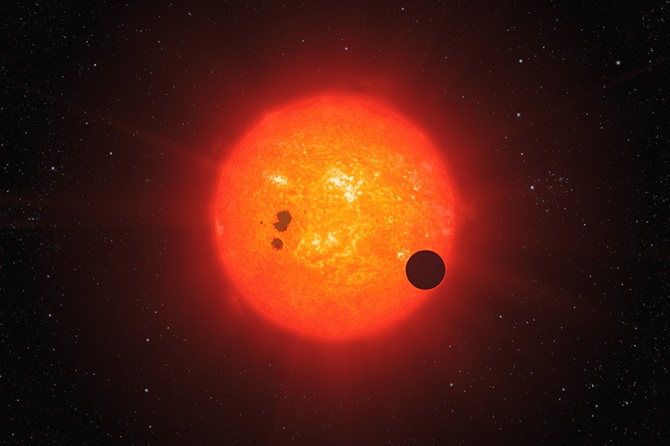
To explain this anomaly, researchers from the University of Zurich created a computer model of the planet’s internal structure. According to the data obtained, TOI-5205 b may contain a large amount of heavy elements – perhaps tens or even almost a hundred times more than in its atmosphere. However, these substances, in all likelihood, “settled” deep inside the planet, without reaching the upper layers of the atmosphere.
It is this layering that may explain why the planet’s outer shell appears so unusual and poor in heavy chemistry, despite its potentially rich composition inside.
Let us remind you that the Artemis II astronauts showed unique photos of the Earth and the Moon.
To be continued…
Only registered users can leave comments